Kalshi’s blockbuster deal with CNN, made public on Tuesday, will see the CFTC-regulated prediction market platform’s market data and odds included on CNN tickers and news coverage. The move is the latest within a broader trend toward integrating prediction market data points — including real-time, crowd-sourced odds — into political, cultural and other news reporting.
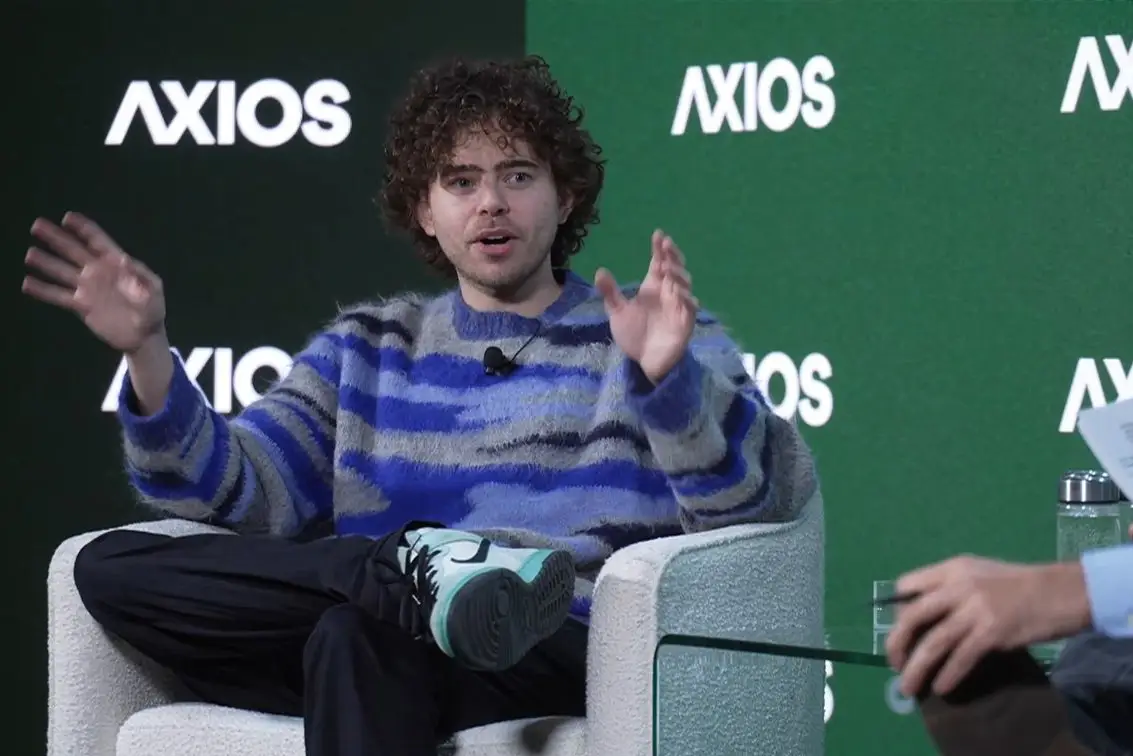
The hope is that Kalshi’s data can help shift the focus from reporting on what has already happened or is currently happening to discussion around future outcome forecasts. Kalshi’s co-founder and CEO Tarek Mansour believes that Kalshi’s real-time data integration will allow CNN and other media outlets to “help audiences interpret what may happen more accurately in the future,” according to Axios.
By design, prediction markets could be an objective check on the notorious “talking heads” partisan reporting common in mainstream media. Market integrations could also help shift political punditry away from over-reliance on partisan narratives and toward more data-driven, objective reporting based on crowd-sourced forecasts.
While the value that prediction market odds and market data can add to mainstream media coverage has the potential to be transformational, the implementation must be approached with caution. For responsible use of the data, it will be important for reporters and outlets to understand some key mechanisms of prediction markets. Otherwise, they risk contributing to misinformation rather than helping to curb it.
Needed check on polls and punditry
While they’re far from a replacement for news reporting, prediction markets provide what many see as a much-needed check on biased news reporting and political punditry.
Prediction markets are unique in that they can provide up-to-the-minute forecasts that aggregate input from a wide range of sources. They’re especially useful for real-time evaluation of effects of scandals or other news stories, for example on certain midterm races and possible political outcomes.
CNN SVP of strategic partnerships and business development Sam Felix said of the deal:
“By partnering with Kalshi to showcase prediction market data in our programming, CNN journalists will have a fresh, data-based angle from which to explore and better understand the world around us,” as quoted in the original Axios report.
The report also mentioned that CNN chief data analyst Harry Enten “will tap into real-time insights from Kalshi in his reporting on air, both via linear TV and CNN’s new streaming subscription service.”
In practice, CNN analysts could present odds or odds movements to political pundits to challenge overly partisan narratives, story framing that can potentially mislead the public regarding the likelihood of a particular event taking place. For example, a certain news report might leave the audience with the impression that Trump is gearing up to fire Secretary of Defense Pete Hegseth. But the Kalshi market on that very question has Hegseth’s chances of getting the boot before Jan. 1, 2026 at just 12%. Inclusion of that fact in the story could help temper the audience’s future expectations.
Prediction markets are more likely to change the nature of punditry rather than eliminate it altogether. However, in order to change it for the better, the pundits must understand the data they are drawing on.
Four things journalists must know about prediction markets
To be able to provide accurate interpretations of market data, anchors will need to understand what conditions can make prediction markets accurate forecasters of future event outcomes, while also understanding their limitations.
These markets are most reliable when forecasts draw on a wide range of diverse sources and independent views (i.e. traders). The 2024 presidential election winner market (on Kalshi and Polymarket) was a major feather in the cap for prediction exchanges. But the markets never claimed certainty. While prediction markets were the first (compared to mainstream polls and political punditry) to shift the odds in favor of Trump winning the election, they also forecasted his chances of winning the popular vote at under 30% on election day, even though he ultimately won that too.
What prediction market odds actually tell us
Does that mean the forecast was wrong? Not exactly. And it’s important for those reporting on this data to understand — and accurately represent to the public — what odds of 30% actually tell us.
It simply means that in parallel worlds with the same available information, the event (in this case, Trump winning the popular vote) would happen about 3 times out of 10. Conversely, a robust forecast of 90%, by definition, would happen 9 times out of 10, meaning 1 time in 10 you would get the surprise outcome of it not happening. That said, in order to arrive at accurate forecasts, markets require certain conditions.
The need for publicly available information
For these markets to work, at least some traders need to see and act on the key publicly-available information, even if it’s only fully understood by a handful of especially sharp traders. When crucial facts are locked up in private briefings, internal memos, or other non-public channels (think: the Papal Conclave), the market odds can look more confident than they actually are.
In those cases, the prices may not be a clean read on “what the crowd knows,” but instead a complex mix of guesswork and a few insiders quietly trading on secrets. Appropriate interpretation of odds will depend on the ability to recognize nuances related to availability of public information.
Trading volume and liquidity
For reliable forecasts, markets also must have sufficient trade volume and liquidity to move based on events and public information instead of a handful of large trades by a few. Concentrated trading activity can sharply shift the odds and reflect confidence in a particular outcome when in fact, there has been insufficient trading volume or price discovery to be able to reflect a well-informed consensus.
Insider trading by design?
In the case of large trading volume based on insider information, the market can also appear confident when in fact, most participants are unsure why odds moved or are essentially trading in the dark relative to those with the key information access. A prime example of this emerged when a savvy trader learned of the Nobel Peace Prize winner ahead of the public announcement, sending the odds for Maria Corina Machado soaring in spite of a lack of public news or update.
While some mainstream reporters may be quick to assume these instances reveal a flaw in the markets, it’s important to understand why many see insider trading activity more as a feature than a bug — a societal benefit of prediction markets.
Responsible reporting will require prediction market understanding
For all of these reasons (and more), CNN anchors will have to understand nuances in the prediction market data they’re using to aid in their interpretations. They must know, for example, when it’s too early to consult a midterm market in their 2026 midterm coverage for a little-publicized race that has insufficient liquidity or public information to be able to arrive at an accurate forecast.
Prediction markets arms race just getting started
The Kalshi-CNN deal comes on the heels of other major partnerships between prediction market exchanges and media entities. Some recent ones include Kalshi data integration on Google Finance, Polymarket’s deal with Yahoo Finance and TIME Magazine (and Sports Illustrated) teaming with Galactic.
For several months now, prediction market platforms have been in a heated race to form partnerships with retail brokerages, social media platforms, AI tools, crypto/blockchains, pro sports leagues (NHL and UFC so far), and online influencers to aid their respective expansions. Media platforms are a key next battleground and many more are likely to follow in short order. It’s reasonable to expect other deals to forge in the near future between regulated prediction market exchanges and the likes of CNBC, Fox, or MSNBC, for example.
The race is also on to capture the business of crypto natives, one of the largest segments of early adopters of prediction markets. While Polymarket’s international exchange has always been crypto-based, Kalshi is going to great lengths to compete in the space.
Kalshi recently announced the tokenization of its contracts on Solana, which brings its markets to one of the most popular blockchains for crypto prediction markets.
Tokenized predictions powered by Kalshi are live on @Solana
$2M+ in builder grants are open, @AxiomExchange is next, and more chains coming soon.
Welcome to the “Powered by Kalshi” era. pic.twitter.com/0zlNoyZNDA
— Kalshi (@Kalshi) December 1, 2025
Competitive landscape shifting
As Kalshi and Polymarket collide stateside — with Polymarket rolling out its US product to a limited number of traders this week — the battle between them will go beyond the partnership race, stretching to transaction fee wars. Polymarket has an initial advantage, debuting with tiny fees, but Kalshi has structured itself to be profitable within the regulated market.
Until recently, the partnership rush has mostly been a two-horse race between Kalshi and Polymarket, but that is quickly changing. On Wednesday, Fanatics became the first major sports betting operator to launch a full-fledged regulated prediction market exchange with markets from Crypto.com. Fanatics Markets will soon be live in 24 states.
FanDuel and DraftKings are hot their heels with plans to launch their own prediction market products soon, and others are sure to follow. DFS companies Underdog and PrizePicks are also already off the ground with prediction market offerings.
Editor’s Note: Valerie Cross also contributed to this article.